
This post may contain affiliate links at no additional cost to you. By making your purchases through the links on this website HIGP may make a small percentage at no direct cost to you. HIGP only promotes products we use & truly believe in. As an Amazon Associate I earn from qualifying purchases. Please refer to my Privacy and Disclosures for further information. HIGP thanks you for your support!
In my last post I broke down what a giant breed dog really costs, and the numbers were not cute. Then I went to the grocery store, looked at what inflation has done to a bag of kibble, and decided you deserved Part 2.
Because here’s the thing: I have seven pets. Three Bernese Mountain Dogs — Grace, Sassy, and Barney — plus Beau, our Bernese-Rottweiler rescue, plus three cats: Bubbles (14), Miesha (12), and Whiskers (10, and operating this household like he pays the mortgage). Four of those animals are the size of a small adult human. All seven of them eat like it’s their job (which let’s be honest, it kind of is).
All-in, food alone for this crew runs about $900 a month. I am not rich, and I am not quietly drowning. What I have is systems. Boring, unglamorous, repeatable systems that cut the waste out of pet care without cutting the care itself.
That’s the whole philosophy, so let me say it plainly before we start: I save money on the stuff around the care. I never save money on the care.
The Ground Rule: Systems, Not Deprivation
Nothing in this post involves feeding my dogs worse food, skipping vet visits, or letting vaccinations lapse. Their shots are up to date. Grace eats a prescription vet diet (more on that expensive darling below). The savings in this house come from buying smarter, wasting less, doing labour myself, and refusing to pay panic prices — not from cheaping out on living creatures.
If a “budget pet tip” involves your animal getting less care, it’s not a tip. It’s a debt you’re handing to your future self, with interest, usually payable at an emergency vet at 2 a.m.
System 1: The Standing Raw Order (and the Freezer Runs the Show)
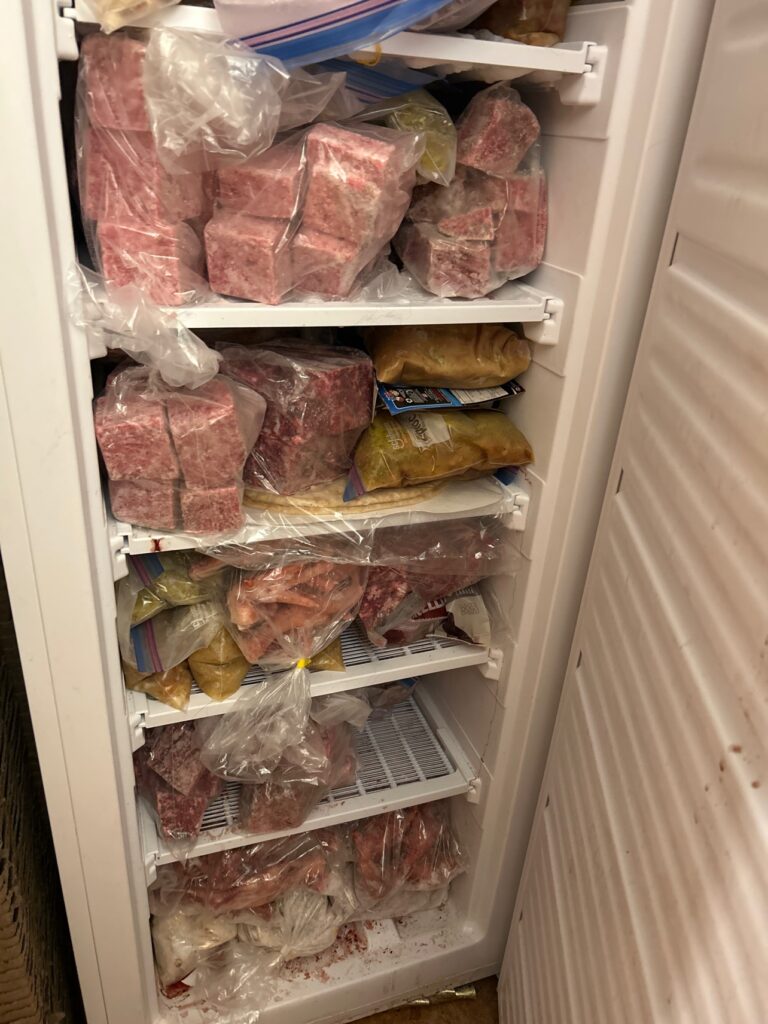
The dogs get raw food alongside their kibble, and I buy it through a standing order with Big Paws Raw. An order is $54.35 — about $60 once I’ve tipped the driver, because the food is delivered and that’s how I was raised.
It comes in bulk 2-lb packs that go straight into the freezer. That works out to roughly $230 a month in raw for four giant dogs. For context, pet-store raw for one 100-lb dog runs about $160–$180 a month. One. Dog. I’d be looking at $650–$700 a month doing it the retail way, which is the kind of math that makes a person sit down on the kitchen floor.
The real trick isn’t the order, though. It’s the freezer inventory. I know what’s in there, and some weeks I skip the order entirely because we’re still working through stock. The standing order serves the freezer — the freezer does not serve the standing order. The fastest way to waste money on raw food is ordering on autopilot and discovering a fossilized pack from March at the bottom of the chest freezer. Ask me how I know. Actually, don’t. The dogs won’t mind a bit of freezer burn, right?
System 2: I Stopped Paying $2 a Meal for Gravy
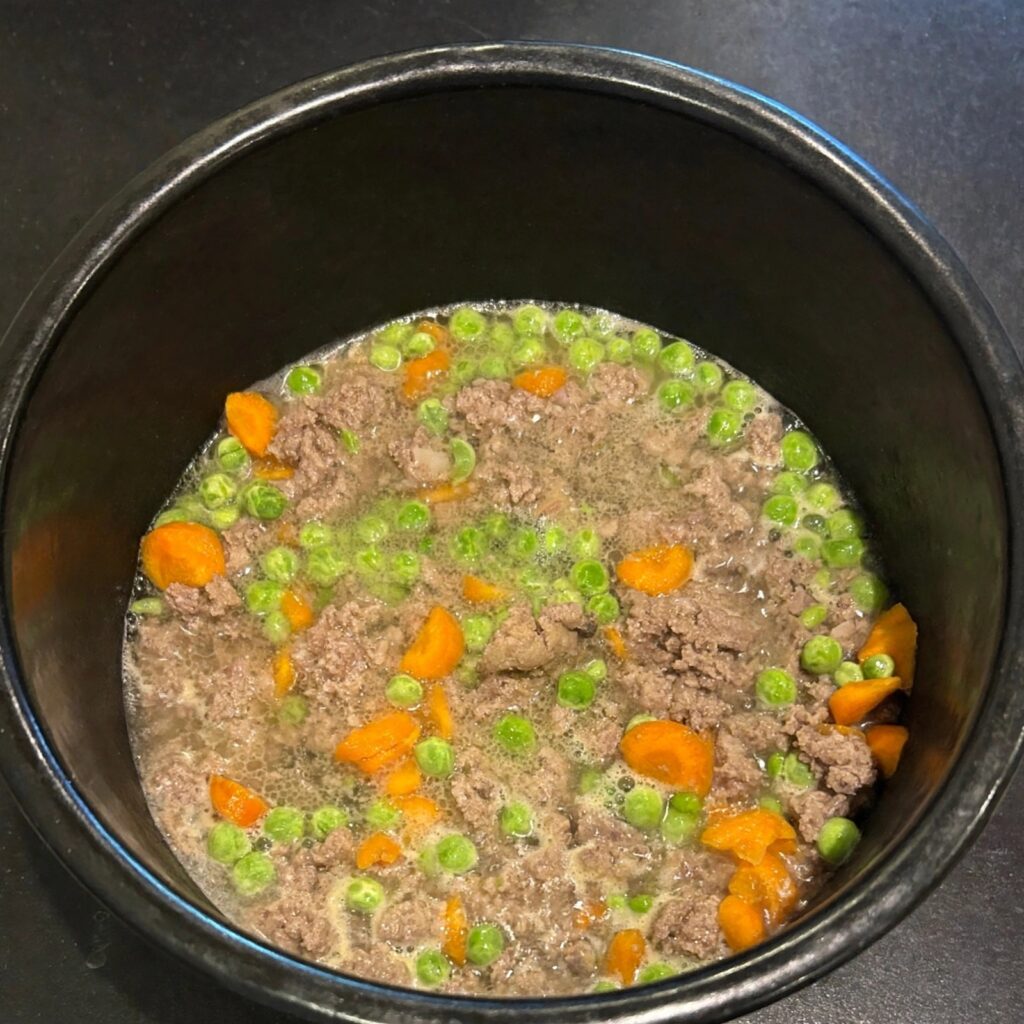
Barney, our seven-month-old Bernese puppy, will not eat plain kibble like a normal animal. He requires a topper. The commercial topper I was buying cost over $6 for three meals — that’s $2-plus a meal for what I can only describe as a bit of meat, a lot of gravy, and a few peas and carrots living their best life.
So now I make it. One pound of ground boneless beef simmered in water (the cooking water becomes the gravy — nothing wasted), a cup of frozen peas and carrots stirred in at the end, cooled, portioned into a muffin tin at a quarter cup per puck, and frozen. A batch costs about $4 and makes roughly 20 pucks. That’s about 20–35 cents a meal instead of $2-plus, and it saves me around $50 a month at one topper a day.
I stopped paying for dog gravy, too. It’s mostly water anyway — two bucks a serving for flavoured water. Barney’s homemade topper costs pennies and he likes it better.
Two rules I don’t bend on this one:
- It’s a garnish, not a meal. The topper stays at about 10% of his daily intake. His complete kibble carries the actual nutrition — that matters enormously for a giant-breed puppy whose joints are under construction. The topper is a bribe. A delicious, cost-effective bribe.
- Boneless only, always. Which brings me to a rule that runs my whole raw program, and it’s in the “refuse” section below because it’s exactly the kind of cheap swap that backfires.
System 3: Kibble on a Calendar, Not in a Panic
Kibble in this house gets bought on roughly a two-month cadence, in the biggest bags, timed — not panic-bought at full price on the night the bin runs empty because somebody (me) forgot to check. Running out of dog food at 6 p.m. is how you end up paying whatever the nearest store feels like charging. Running out is a planning failure, and planning failures are expensive.
Barney’s food is on Ren’s Pets Autoship, so the puppy’s supply just shows up on schedule and I never pay the desperation premium on his behalf.
Is a calendar exciting? No. Does it save me real money every single cycle? Also no — it saves me from losing real money, which is the same dollars wearing a different hat.
System 4: I Stack Points Like It’s a Sport
I’m a Ren’s Pets VIP, and I treat rewards points the way other people treat a savings account. Points from the regular food runs accumulate all year, and they’re earmarked — among other things, the pets’ Christmas gifts are getting bought with rewards, not cash.
The staff at Ren’s ask me every single time if I want to use my points. Nope — those are for Christmas. At this point they’re honestly amazed at how many I’ve amassed. Honestly, I’m surprised they haven’t memorized my phone number to pull up my account by now.
This is the least heroic system on the list and possibly the most satisfying. The food was getting bought anyway. The only decision is whether the loyalty program hands some of it back.
System 5: I Am the Groomer Now
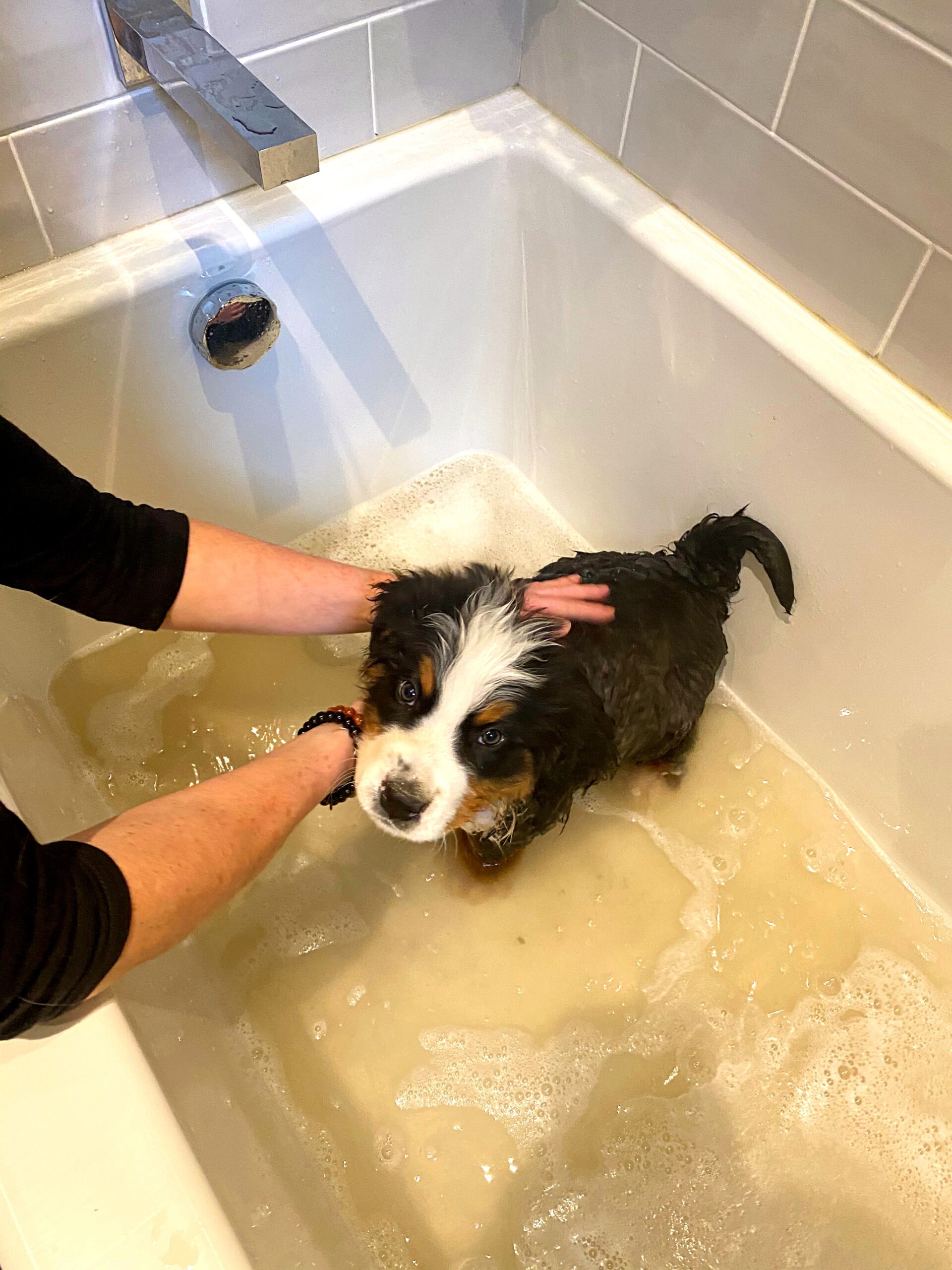
From Part 1: a groomer charges $200–$300 per dog for a giant breed. Four dogs is $800–$1,200 per round, and Bernese coats need regular rounds. Professional grooming for this pack would be one of the largest line items in my entire budget.
So I learned to do it myself — the brushing, the bathing, the nail-and-coat maintenance, all of it, at home. It’s work. It’s also a four-figure annual saving, and honestly some of the best one-on-one time I get with each dog. This is the system that turned into my Big Dog Grooming Guide, because every giant-dog owner I mentioned the groomer math to had the same expression on their face.
One skipped salon round pays for the guide about a hundred times over. I checked that math in Part 1 and it still makes me a little smug.
My Big Dog Grooming Guide ($9.99) — the complete at-home routine for giant double coats:
System 6: One Steam Cleaner vs. a Thousand Disposables
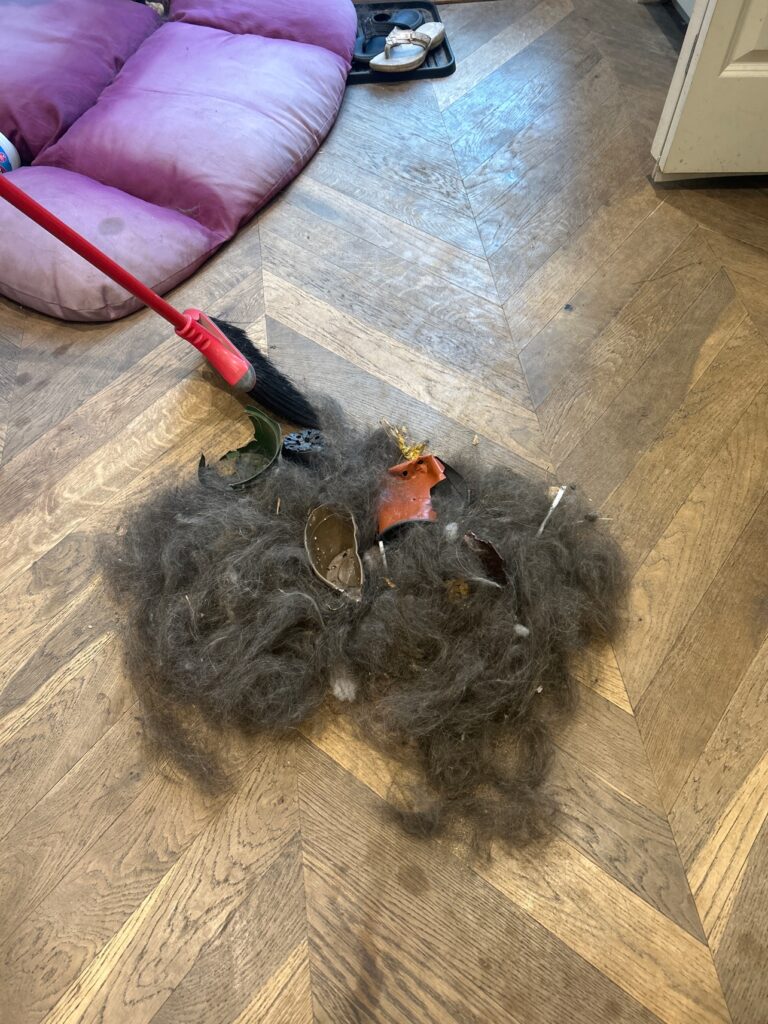
Living with seven animals means cleaning at what I call “dog level” — everything from nose height to tail height. Walls. Baseboards. The works. I used to burn through disposable wipes, mop refills, and specialty sprays at a rate that would embarrass a small hotel.
Then I bought one inexpensive steam cleaner off Amazon, and it replaced nearly all of it. No refills, no consumables, no per-use cost — just water and heat, on everything dog level,
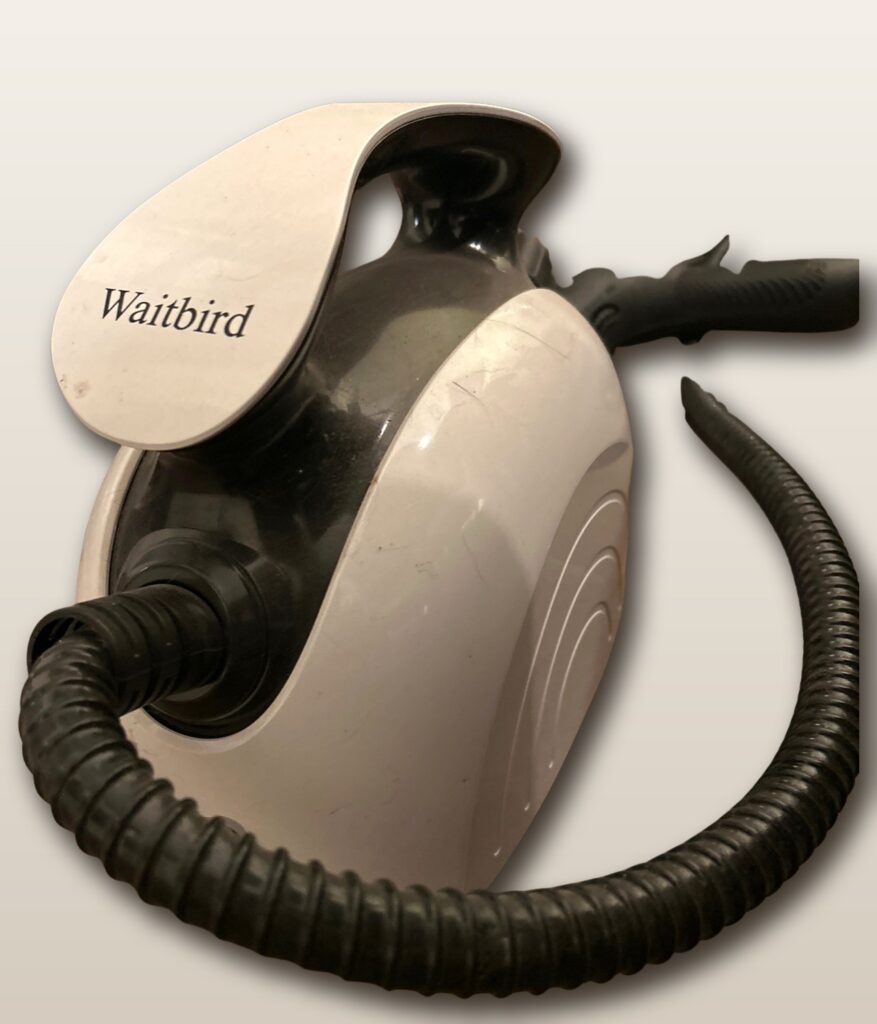
the Waitbird handheld steam cleaner on Amazon.ca
whenever the pack has been particularly artistic. It is, without competition, the hardest-working appliance in this house, and the pack includes a refrigerator.
It came with a pile of attachments — there’s one that does the windows, and a handle and mop head for the floors. And the part that matters most to me: steam takes chemicals out of the
equation entirely. Bernese are a cancer-prone breed, and after losing Ben, I’m not spraying anything around this house that I don’t have to.
Where I Refuse to Save
Every system above cuts waste. This section is the opposite: the places where the “cheaper option” costs more in the end, so I don’t take it.
Grace’s food. Grace eats Royal Canin Hydrolyzed Protein Satiety — a veterinary diet — because she has allergies and because the weight management protects her aging joints. It’s $235.10 a bag. I buy it, on schedule, without shopping for a “close enough” alternative, because her vet directed it and her comfort depends on it. This is the single most expensive food in the house and it is the last place I would ever cut.
Vet care. Vaccinations up to date, problems seen when they’re problems. We’re at our vet so often they’ve started waiving our visit fees, which is either a loyalty program or an intervention. Skipping routine care on a giant breed doesn’t save money; it schedules a bigger bill.
The boneless rule. My raw rotation pairs a boneless protein with bone-in ground pork. A cheaper move would be swapping the boneless protein for another bone-in one when it’s on sale. I don’t. Too much bone in the mix and the dogs’ stool gets rock hard — the “saving” becomes a miserable dog and potentially a vet visit. The boneless protein stays boneless. Same reason my homemade topper is always boneless: cooked bone-in meat never goes in the pot, full stop.
Food quality, full stop. Every saving in this post is in sourcing, timing, labour, and waste. None of it is in what’s actually in the bowl.
The Part No System Fixes
I need to be honest about the limit of all this, because a post that only lists clever systems would be lying to you by omission.
Benson — our Bernese who we lost in March — needed TPLO surgery for a torn cruciate ligament. It cost us about $14,000. No freezer inventory, points program, or homemade topper prevents a blown knee in a giant breed. Daily affordability systems and catastrophic costs are two different animals entirely, and pretending a budget spreadsheet covers both is how people end up making medical decisions with a credit card shaking in their hand.
What the systems do buy you is a life that isn’t already financially on fire when the emergency lands. And if your dog ever faces that surgery, the recovery is its own project — I wrote the TPLO Recovery Survival Kit out of everything Benson’s recovery taught us, so nobody else has to learn it the scared way at midnight.
The TPLO Recovery Survival Kit ($14.99) — the week-by-week recovery planner I built from Benson’s recovery:
Frequently Asked Questions
How much do you actually spend on pet food each month?
Raw runs about $230 a month for the four dogs, and kibble is bought on a roughly two-month cycle — Grace’s vet diet alone is $235.10 a bag. All-in, feeding four giant dogs and thre cats comes to about $900 a month. It’s a lot. It’s also roughly $400–$500 a month less than the pet-store-raw route would run for the raw portion alone, which is the entire point of this post.
Is raw feeding cheaper than kibble?
It depends entirely on your source. Raw from a pet store is the most expensive way to feed a giant dog — $160–$300+ a month per dog. Farm-direct or bulk suppliers like Big Paws Raw flip the math completely. If you can’t source it affordably, good kibble on a planned buying cycle beats expensive raw bought in a panic, every time.
Can I make the food topper for my dog?
The recipe is simple — boneless beef simmered in water, peas and carrots, frozen in portions — but keep it a garnish at around 10% of daily intake, introduce it over a few days, and use boneless meat only. For puppies, seniors, or dogs with health conditions, run any diet change past your vet first. A topper is a bribe, not a nutrition plan.
If I only copy one system, which one?
The freezer-and-calendar habit. Know what you have, buy on a schedule in the biggest size, and never pay the 6 p.m. desperation price. It requires no new equipment, no new supplier, and it starts saving you money the very next time you’d otherwise have run out.
Do you ever just buy the expensive thing?
Constantly. Grace’s prescription food, vet care, proper supplements — the expensive stuff that is the care. The whole game is telling the difference between expensive-because-it-matters and expensive-because-you-didn’t-plan. I splurge on the first and I’m ruthless about the second.
Want more of the real numbers — and the occasional photo of a 100-lb dog in a bath situation? Join the Pack, my free email list, and I’ll send you the stuff that doesn’t make it into posts.
And if you haven’t read it yet, start with Part 1: How Much Does a Giant Breed Dog Really Cost? The Honest Breakdown — this post makes a lot more sense with those numbers in your head.